If you’ve ever finished a basement or added a bathroom below ground level, you’ve probably heard the term “ejector pump.” It’s not the most glamorous part of your plumbing, but it can be one of the most important. So let’s talk about what it does, when you need one, what ejector pump installation costs, and how to spot trouble early.
What Is a Sewage Ejector Pump?
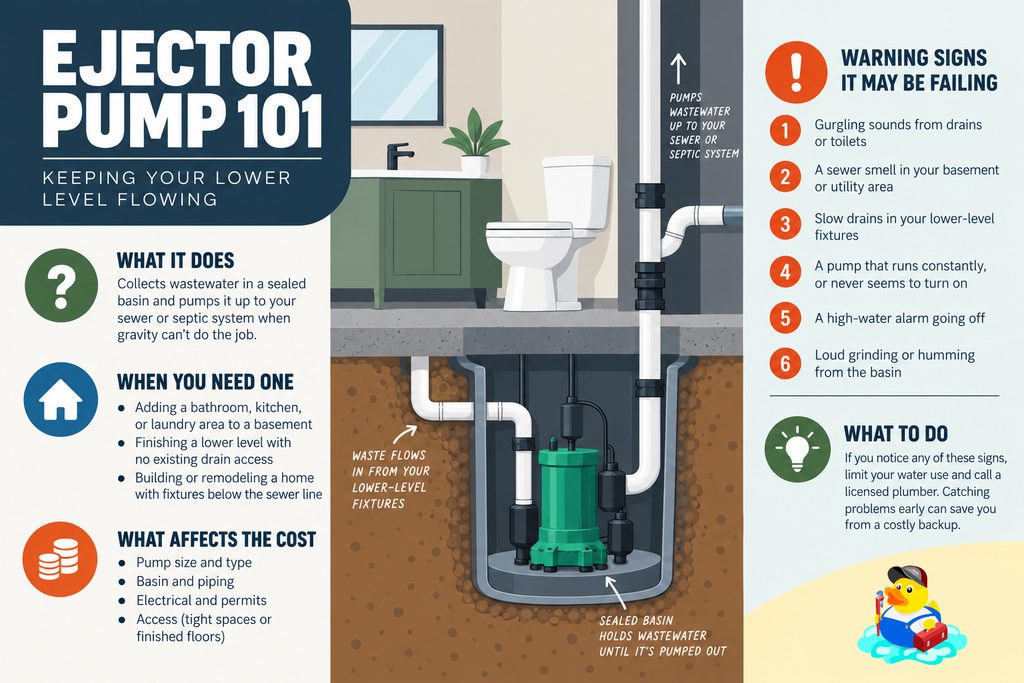
Gravity does most of the work in your plumbing, but it can’t push wastewater uphill. If a bathroom, laundry, or wet bar sits below your main sewer line, waste has nowhere to go on its own. An ejector pump collects that waste in a sealed basin, then pumps it up and out to your sewer or septic system.
When Do You Need Ejector Pump Installation?
You’ll most likely need ejector pump installation if you’re:
- Adding a bathroom, kitchen, or laundry area to a basement
- Finishing a lower level that has no existing drain access
- Building or remodeling a home where fixtures sit below the sewer line
If you’re planning a basement remodel, get your plumber involved early. Where the pump goes affects your whole layout, and it’s much easier to plan for ejector pump installation before the walls and floors are finished.
What Does Ejector Pump Installation Cost?
Every home is different, so we can’t give you a one-size-fits-all number. A brand-new install that means cutting through a concrete floor, setting a new basin, and running new piping can cost more.
Here’s what moves the price:
- Pump size and type. Standard units cost less than heavy-duty or grinder models.
- Basin and piping. A new pit and a longer discharge run add labor and materials.
- Electrical and permits. Your pump needs a proper power source, and permit requirements vary by municipality.
- Access. Tight spaces and finished floors take more time.
The best way to know your real cost is a written estimate from a licensed plumber.
Warning Signs Your Ejector Pump Is Failing
Don’t wait for a backup. Watch for these red flags:
- Gurgling sounds from drains or toilets
- A sewer smell in your basement or utility area
- Slow drains in your lower-level fixtures
- A pump that runs constantly, or never seems to turn on
- A high-water alarm going off
- Loud grinding or humming from the basin
Many pumps last around 7 to 10 years. If yours is getting older and acting up, a repair may buy you some time, but a full replacement is often the smarter move. Either way, catching problems early is far cheaper than cleaning up a sewage backup.
What To Do If You Suspect a Problem
If you notice any of the signs above, limit your water use. Skip the laundry, hold off on showers, and avoid flushing until someone can take a look. Running water into a struggling system can push a small problem into a messy one.
Call Ottagan Plumbing for Ejector Pump Installation
Whether you’re finishing a basement or replacing a pump that’s on its last legs, Ottagan Plumbing can help. We provide ejector pump installation, repair, and replacement for homeowners in Holland, Zeeland, Hudsonville, Grand Haven, and throughout Ottawa and Allegan counties. Call us at (616) 392-6053, and we’ll make sure things keep flowing the right way.